Dry Needling vs. Acupuncture: What's the Difference?
Same needle. Completely different reason for using it. That's the short answer.
Dry needling and acupuncture both use thin, solid needles, so from across the room they look identical. The difference is why the needle goes where it goes, and what we're trying to get out of it.
What is acupuncture?
Acupuncture comes from traditional Chinese medicine. Needles go into points along meridians, which in that system are channels that energy, or qi, flows through. It's usually done by a licensed acupuncturist and it's used for a lot more than muscle and joint pain.
What is dry needling?
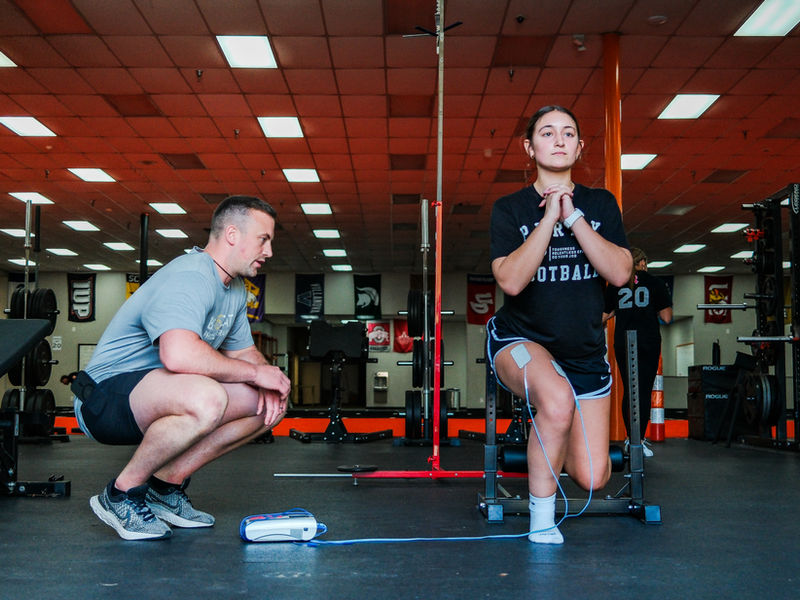
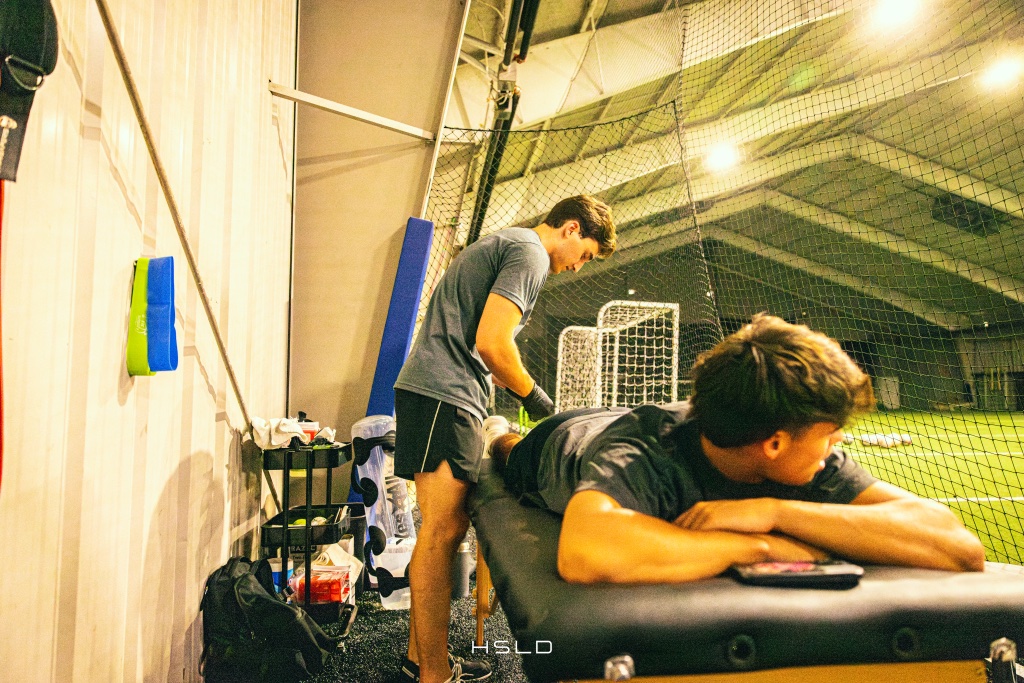
Dry needling is based on modern anatomy and how your nervous system handles pain. The needle goes into a specific muscle, usually a tight, tender band or trigger point we found during your exam, to calm down pain and muscle tension so you can move and load that area better. "Dry" just means nothing gets injected. It's not a shot.
At Big Cat, dry needling is done by our Doctors of Physical Therapy and our sports chiropractor, never handed off. Ohio's physical therapy board has said PT assistants can't do it, because it requires an evaluation first.
So what's the real difference?
- ✓Why: acupuncture works off meridians and energy flow. Dry needling works off muscles, anatomy and the nervous system.
- ✓Where: acupuncture points are mapped out ahead of time. Dry needling goes into the muscle we found during your exam.
- ✓Who: acupuncture is usually done by licensed acupuncturists. Dry needling is done by trained clinicians, after an evaluation.
- ✓Goal: we use dry needling to turn down pain and tension so you can train. It's a tool inside a rehab plan, not the plan.
Does dry needling work?
For a lot of people it helps with pain. A 2021 review in the journal Physical Therapy pooled the research on dry needling done by physical therapists and found it reduced musculoskeletal pain compared with no treatment, fake (sham) needling and other treatments. The authors also rated most of that evidence as low quality, mainly because the studies didn't line up with each other very well.
My honest take: it's a great way to turn the volume down on pain so we can get you moving and lifting. It's not a magic fix. If needles are the only thing happening in your rehab, you're missing the part that actually makes you more durable. Strength still wins.
Does it hurt?
Less than most people expect. The needle is very thin. You'll usually feel a quick prick going in, and sometimes a twitch or a deep, crampy ache when it hits the right spot. That twitch is normal.
Afterward it's common to be sore for a day or so, like after a hard workout. A small bruise or a little bleeding at the spot can happen too. Serious problems are rare, and knowing the anatomy well enough to keep it that way is part of our job.
Who is it good for?
We use it most for stubborn muscle-related pain, like the neck and upper traps, low back, hips and glutes, shoulders and calves, and for overworked muscles in athletes. It isn't for everyone. If you hate needles, take a blood thinner, or it just isn't the right fit for what's going on, we have plenty of other tools.
Bottom line
Dry needling and acupuncture share a needle, not a philosophy. At Big Cat, dry needling is one tool in a 1-on-1 plan, available at both our North Canton and Twinsburg locations. Want to know if it's right for you? Call or text us at (330) 574-9205 or fill out the contact form.
READY TO START?
Book a Free Discovery Visit
30 minutes. No pressure. Just expert guidance to set you on the right path.
CONTACT US